What is Kairos?
by Kenneth Pino | Dir Mkt & Comm, PCM Province
Ask a high school senior about the future and chances are they’ve heard these questions before.
Where are you going after graduation? What are you going to do?
Good questions, but there’s another one that takes a little longer to answer…
Who am I becoming?
And maybe one that takes a little contemplative quiet to even hear…
God, where are You in all of this?
Kairos gives young people a few days away from school to sit with those questions.
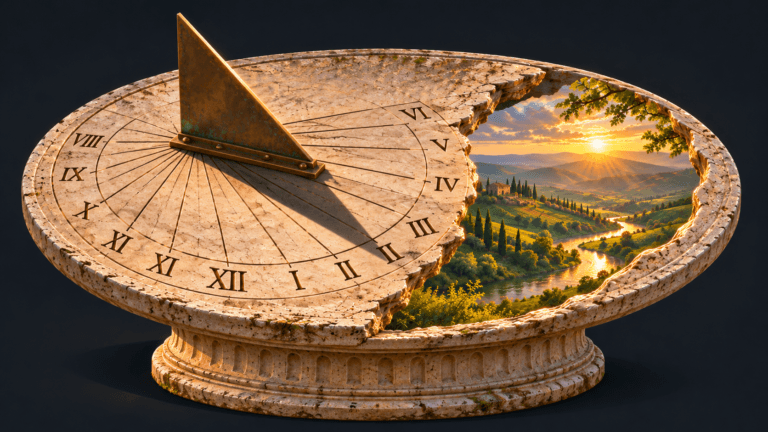
The name Kairos comes from a Greek word, καιρός | an opportune moment… the right time… or, more specifically, the exact or critical time. Some who make the retreat refer to it as “God’s time.” There’s time to think about who they are, about the people they love, and about the relationship they have with God in the middle of the life they’re already living.
The story of Kairos begins with people sharing something they had found worthwhile. Back in the 1940s, on the Spanish island of Mallorca, a group of lay Catholics and priests wished to reach people who felt distant from the Church. One of them was a layman named Eduardo Bonnín. The movement they helped begin became known as Cursillo de Cristiandad… a short course in Christianity. Its first officially recognized Cursillo took place at the monastery of San Honorato in January 1949. By 1957, people were making Cursillo in Waco, Texas, where the first U.S. weekend was held in Spanish. In 1965, Fr. Douglas Brown and a team of priests, religious brothers and laypeople in the Diocese of Brooklyn adapted that experience for young people. In those early years, the retreat went by names like Christian Awakening and Encounter. It reached St. Xavier High School in Louisville in 1970 and Joliet Catholic High School in Illinois in 1975.
That’s how it grew… one school helping another offer its students something its own students had experienced. And right here in Joliet, the Carmelites were… are… part of that story.
During one of these “short courses in Christianity” participants might have spent part of those three days sitting around a table, listening to someone talk about are… are trying to… live their faith at home and at work. Then they’d have a chance to talk about their own life. They’d pray together, go to Mass, and spend time with what they’d heard shared. Cursillo calls that way of living piety, study and action. One makes time for God… keeps learning about their faith… and then does something with it… maybe for the person who’ll be sitting across from them at work on Monday morning.
Students who have made Kairos come back to lead it alongside teachers and campus ministers. They give witness talks… they tell something of their own lives and where faith has found a place in them.
While students are at Kairos, they listen… quite possibly to the kid who has sat two seats over from them since freshman year.
Participants talk in small groups and then take time to sit quietly with what was shared. They eat together, pray together, celebrate Mass together, and have an opportunity for reconciliation and spiritual conversation.
Participants may know what their classmates do after school. They may know who their friends are. But have they ever heard them talk about who taught them to pray?
Maybe, while sitting in chapel, they find themself bringing a classmate to God in prayer… and there is something very Carmelite about that… someone trusted them with a little of their life, they listened, and now that person’s name is part of their prayer.
And then they go home… “living the fourth.”
That expression, living the fourth, is another gift from Cursillo.
Kairos lasts three days. The “fourth day” is the life they live after Kairos.
For a student coming home from Kairos, living the fourth is sitting at the dinner table when someone begins talking about their day.
Previously, they’d say, “How was it?” and keep right on eating.
But now… Living the Fourth… they put down their fork and ask…
“What happened?”
And then they listen.
They give freely… completely… willingly… and eagerly… of their time.
Because their time is God’s time…
Because they are… living the fourth.
The Carmelites of the Province of the Most Pure Heart of Mary, in allegiance to Jesus Christ, live in a prophetic and contemplative stance of prayer, common life, and service. Inspired by Elijah and Mary and informed by the Carmelite Rule, we give witness to an eight-hundred-year-old tradition of spiritual transformation in the United States, Canada, Peru, Mexico, and El Salvador, and Honduras.
Please consider supporting their mission
https://carmelitemedia.tiny.us/supportpcm
to make a financial donation.