
What are Solemn Vows?
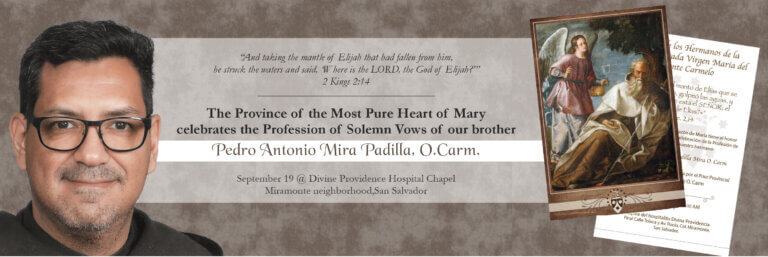
What are Solemn Vows?
Solemn Profession is the public and lifelong act by which a Carmelite vows poverty, chastity, and obedience according to the Rule and Constitutions of the Carmelite Order. This follows a substantial period of formation and temporary, or “simple”, profession. Temporary vows allow both the individual and the community to continue discerning the vocation. Solemn profession means that this discernment has matured into a commitment to live “in allegiance to Jesus Christ as a Carmelite for the rest of his life.”
“Solemn” is not used generically to mean that the ceremony is especially impressive. It is a canonical term: a solemn vow is one recognized as such by the Church. Through religious profession, the person assumes the evangelical counsels by a public vow, is consecrated to God through the ministry of the Church; and is incorporated into the religious institute with defined rights and responsibilities. That is the Church’s own description in Canon 654.
Why Poverty, Chastity, and Obedience?
Poverty means entrusting one’s material life to God and the community. Material possessions are shared and used according to the Order’s law and the decisions of legitimate superiors. Spiritually, poverty creates vacare Deo… space and availability for God… while freeing the heart from domination by materialism. It also implies solidarity with the poor and a simpler, more just way of living. Carmel describes service of the poor as flowing naturally from Carmelite profession in the mendicant tradition.
Chastity means lifelong celibate chastity “for the sake of the kingdom” so that the person may belong to God with an undivided heart and be more freely available to the community and to the Church. It is not a rejection of friendship or human love. It is directed toward puritas cordis, purity of heart… the integration of one’s capacity to love so that relationships become self-giving rather than possessive. Canon law describes it as both a sign of the world to come and a source of spiritual fruitfulness in an undivided heart. See Canons 598–601.
Obedience means offering one’s will to God within the life of the Order. The root meaning is simply “to hear or to listen.” The Carmelite seeks God’s will through Scripture, prayer, the Rule, communal discernment, the needs of the Church, and the directions of superiors according to the Constitutions. It is not mindlessness or permission for arbitrary control. Carmelite authority is meant to be fraternal and discerning. Leaders themselves must listen to God and serve the community. The Carmelite recognizes that obedience should challenge and transform the person without erasing conscience, individuality, or God-given gifts.
What makes a Carmelite’s profession specifically Carmelite?
These vows are common to Catholic religious life, but a Carmelite promises to live them according to a particular charism. Carmel defines the charism as Prayer, Community, and Ministry. More specifically as allegiance to Jesus Christ, contemplation and the search for the living God, fraternity and common life, prayer (especially prayerful attention to Scripture), service “in the midst of the people” (this is the Mendicant component), prophetic solidarity with those who suffer, and life under the inspiration and protection of Mary and the example of Elijah.
The Rule of Saint Albert codifies this through direction to prayer, silence, meditation on Scripture, Eucharist, work, common ownership, mutual correction in love, and obedience. Solemn profession therefore does not mean merely promising three isolated disciplines. It means giving one’s entire future to God through prayer, fraternity, and service.
The True Meaning…
Solemn profession is both a personal self-offering and an ecclesial act. The person freely gives their self to God, but the Church and the Carmelite Order also publicly receive them. The Carmelite now belongs definitively to the Order, while the Order assumes responsibility for the Carmelite as a brother or sister.
The person making solemn vows prostrates in humility while asking God for the help needed to fulfill the perpetual vows. That gesture is important: profession is not a declaration that the Carmelite has achieved spiritual perfection. It is a promise to persevere in a lifelong process of religious discernment, relying on God and the community.
AI was used to compile the Canonical references in this article and to source specific details from OCarm.org (Curia), The Rule of Saint Albert, Carmelites.net, Vatican.va, and Carmelite.org (British Carmelites) on specific Church and Order practices and structures. The interpretations of those aspects throughout the article are solely those of the author.
by Kenneth J. Pino | Dir. of Mkt. & Comm., PCM Province
If you are interested in exploring a Religious Vocation or just learning more about what it is to be a Religious Carmelite, visit The Carmelite Way.
The Carmelites of the Province of the Most Pure Heart of Mary, in allegiance to Jesus Christ, live in a prophetic and contemplative stance of prayer, common life, and service. Inspired by Elijah and Mary and informed by the Carmelite Rule, we give witness to an eight-hundred-year-old tradition of spiritual transformation in the United States, Canada, Peru, Mexico, and El Salvador, and Honduras.
Please consider supporting their mission
https://carmelitemedia.tiny.us/supportpcm
to make a financial donation.