The Brown Scapular
Brown Scapular Questions & Answers
These questions explain how the ceremony relates to the scapular’s meaning and to everyday Christian life. Enrollment expresses both belonging to the Carmelite family and a continuing commitment to follow Christ with Mary.
Browse the Questions ↓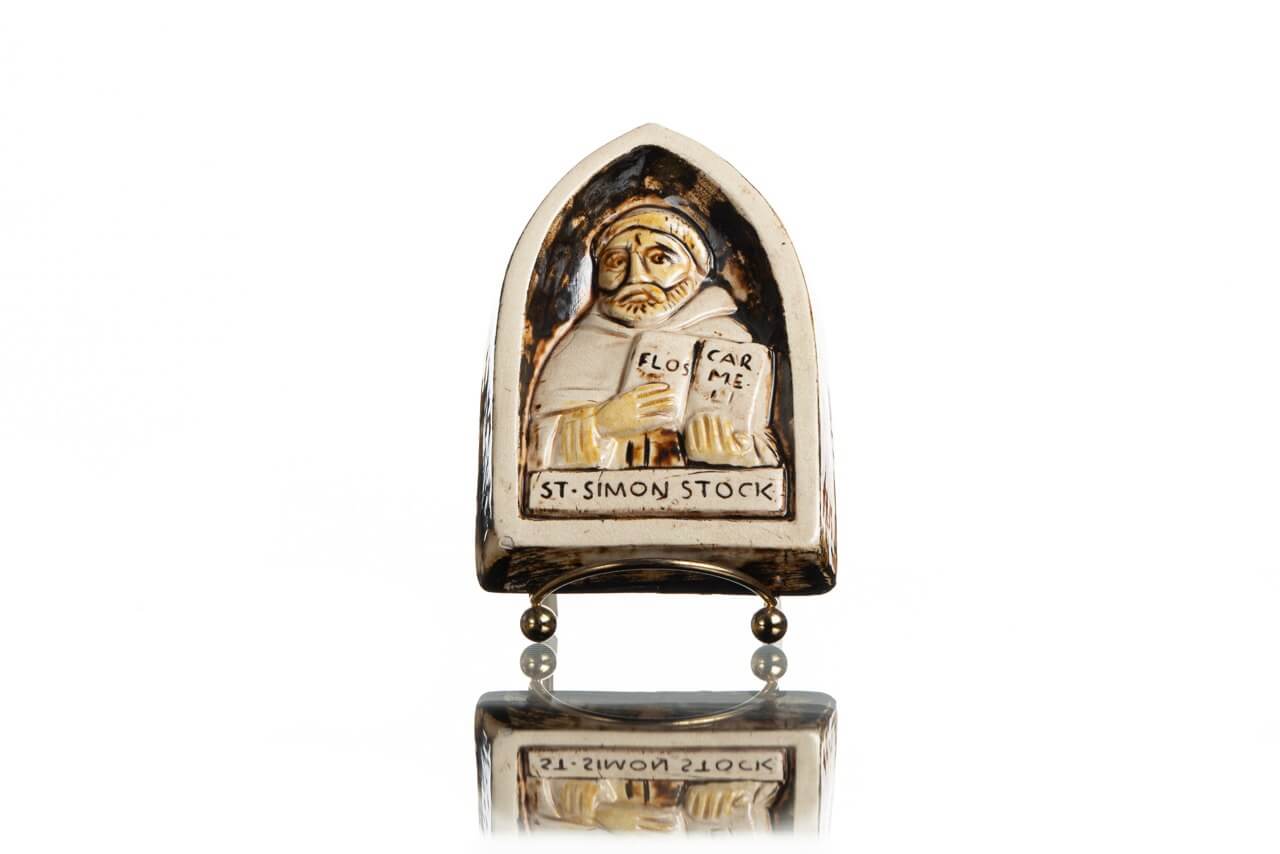
Receiving the Scapular
Who may bless the scapular and enroll a person?
The preliminaries state that priests and deacons have the faculties to bless scapulars. They also state that other authorized persons may enroll the faithful. The prayers of blessing in both rites are assigned to a priest or deacon. [1]
Must investiture take place with a community?
A community celebration is preferred in the preliminaries. The fuller opening places the gathering before the main altar or a picture of Our Lady; the Alternative Rite describes the officiant standing before a picture of Our Lady. [1, 2]
Can several people be enrolled together?
Yes. In the fuller rite, when there are many recipients and it is deemed appropriate, the officiant may say the enrollment formula once. Everyone answers “Amen” and then approaches to receive the scapular. [3]
Can a medal be used for the initial enrollment?
The preliminaries specify the traditional form of the scapular for blessing and enrollment. It may then be replaced by the appropriate medal. [1]
Is blessing the scapular the same action as enrollment?
The rite treats them as distinct parts of one celebration. The prayer of blessing and sprinkling with holy water precede the placing of the scapular and the enrollment words. An announcement of affiliation follows. [3, 4]
What does belonging to the Carmelite family mean?
The wearer seeks to share in Carmel’s spirit and life, with Mary as a model of following Christ. The enrollment formulas announce participation in the spiritual benefits of the Order. The spiritual guidance emphasizes mutual support, prayer, cooperation, and fraternal communion. [3–5]
Prayer and Daily Life
The spiritual commitment gives practical meaning to the sign received at investiture. It reaches into prayer, worship, service, and the responsibilities of daily life.
What place does daily prayer have?
The guidance calls for time to meet God in prayer, meditation on salvation, and participation in the Church’s liturgy, especially the Eucharist. It names a liturgical hour, psalms, or the rosary as daily practices. It also calls for attention to the duties of one’s state of life. [5]
Is the rosary the only prayer named?
No. The passage names a liturgical hour, some psalms, or the holy rosary. Its wider emphasis is a life of prayer, listening to God’s Word, and allowing prayer to shape conduct. [5]
Why does the rite speak about wearing the scapular day and night?
The introductory address describes this wearing as a sign of constant prayer and special dedication to the love and service of Mary. It also connects the scapular with the baptismal commitment to put on Christ. [2]
How is devotion expressed in service?
The commitment includes charity, voluntary penance, sharing, reconciliation, justice, care for the sick, and listening to the poor. It also includes evangelization and support for communion among members of the Carmelite family. [5]
What do the intercessions ask God to give?
They ask for a life clothed in Christ, fidelity to baptism, love for the poor, growth in holiness, and readiness for eternal life. The shorter rite also names contemplation, joy in fraternity, zeal in serving others, and daily attention to God’s Word. [4, 6]
What hymns are suggested at the conclusion?
Section 17 suggests an appropriate hymn to Our Lady, with Flos Carmeli, Salve Regina, and Sub tuum praesidium given as examples. This section concludes the fuller rite before the Alternative Rite begins. [4]