

Faith and Grief in the Wake of Sudden Loss
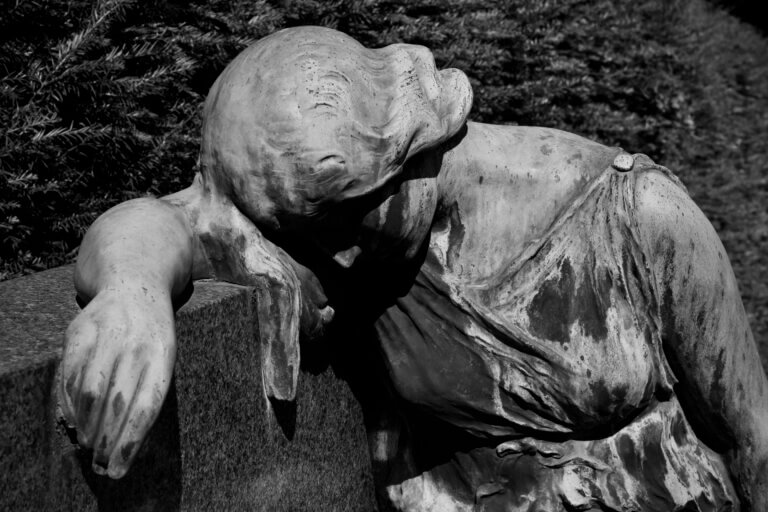
by Kenneth J. Pino | Dir Mkt & Comm, PCM Province
There is a particular silence that settles over a community when tragedy arrives without warning. Recently, our own Carmelite family felt that ache deeply as the community at Salpointe Catholic High School in Tucson mourned the sudden, tragic loss of three students over a single weekend. In hallways where young people laughed and walked together just days earlier, classmates, parents, and friars were suddenly left holding one another in the dark, confronting a grief too heavy for words.
Moments like this remind us how fragile life can be, and how universal the shock of sudden loss truly is. Whether through an unexpected accident, a sudden medical crisis, or an unforeseen catastrophe, losing a loved one without warning leaves the human mind struggling to catch up to reality. There is no time to say goodbye, no chance to prepare the heart, and no easy explanation that can soften the blow.
When the unthinkable happens, neither the ancient wisdom of Scripture nor the deep contemplative tradition of Carmel offer us neat answers. Instead, they offer us a posture… worshiping through the pain.
In the opening chapter of the Book of Job, we encounter the ultimate biblical portrait of sudden, cascading tragedy. In a single afternoon, messengers arrive back-to-back until the final, unthinkable report is delivered: a sudden wind has collapsed the house where Job’s children were gathered, taking their lives in an instant.
Job’s reaction in Job 1:20–21 is raw, visceral, and deeply instructive for anyone walking through sudden bereavement:
“Then Job arose and tore his robe and shaved his head and fell on the ground and worshiped. And he said, ‘Naked I came from my mother’s womb, and naked shall I return. The Lord gave, and the Lord has taken away; blessed be the name of the Lord.'”
Notice what Job does first. He does not put on a stoic mask or offer hollow platitudes to make the people around him feel comfortable. He tears his robe and shaves his head… the ancient expressions of unfiltered agony and sorrow.
Within our Catholic and Carmelite family, we sometimes mistakenly believe that strong faith requires holding back tears, or that deep sorrow signals a lack of trust in God. Scripture rejects that myth entirely. Even Jesus wept openly at the tomb of his friend Lazarus, knowing full well he was about to raise him from the dead. Grief is not the opposite of faith… grief is the price of love. To mourn a sudden loss with a broken heart is simply to honor the depth of love we shared.
When sudden tragedy strikes, no one expects you to have the strength to sing upbeat hymns or untangle complex theological questions. Job teaches us that worshiping through the pain is much simpler and far more profound. It is refusing to let pain push you away from God.
Turning Toward God, Not Away: In his devastation, Job did not run from the Almighty. He fell directly at God’s feet. Sometimes the purest act of prayer is collapsing in the dust of our sorrow and whispering, “Lord, I cannot stand right now, so I am falling on You.”
Contemplative Presence Without Answers: God never explains why the wind struck that house. Not in the first chapter of Job and not even at the end of the book. In the Carmelite tradition, saints like John of the Cross and Thérèse of Lisieux remind us that God is often closest in the “dark night,” when all human understanding fails. Meaning in tragedy is rarely found in a neat explanation; it is found in anchoring ourselves to the presence of Christ when nothing makes sense.
How could a heartbroken father say, “The Lord gave, and the Lord has taken away; blessed be the name of the Lord,” on the worst day of his life? Because Job recognized that every person we love is a precious, temporary gift entrusted to us by a loving Creator.
When someone is taken far too soon, we rightly ache for the milestones, conversations, and futures lost. Yet Job invites us to hold gratitude alongside our tears… gratitude for every laugh shared, every quiet moment spent together, and every way our lives were enriched by those we loved. Saying “Blessed be the name of the Lord” in the middle of grief does not mean saying, “I am glad this happened.” It means saying, “Even though my heart is shattered, God is still good, my loved one was a grace from His hand, and death does not have the final word.”
Whether we are praying alongside our brothers and sisters at Salpointe or carrying a private heartbreak of our own, Job’s story leaves us with practical lessons for navigating sudden loss:
Give yourself permission to weep without guilt or shame. Sorrow needs space to breathe, and God never asks us to pretend that tragedy does not hurt.
Bring your raw anger, confusion, and tears to God. God’s shoulders are broad enough to carry our hardest questions and our heaviest silences.
May Our Lady of Mount Carmel wrap all who are grieving in her maternal mantle. And when we have no words left to pray, may we find the grace simply to fall on our knees in the wreckage and rest in the arms of the One who weeps with us.
The Carmelites of the Province of the Most Pure Heart of Mary, in allegiance to Jesus Christ, live in a prophetic and contemplative stance of prayer, common life, and service. Inspired by Elijah and Mary and informed by the Carmelite Rule, we give witness to an eight-hundred-year-old tradition of spiritual transformation in the United States, Canada, Peru, Mexico, and El Salvador, and Honduras.
Please consider supporting their mission
https://carmelitemedia.tiny.us/supportpcm
to make a financial donation.