
La saggezza intramontabile del Carmelo: la preghiera come presenza
“”La vera preghiera ha inizio nel mondo reale, nel nostro io autentico, in tutte le relazioni con gli altri e nei nostri compiti nella vita. La preghiera non è una fuga. È un incontro con Dio, là dove Egli viene a noi. Ciò significa la vita reale, nel profondo della nostra identità, nei nostri rapporti umani con gli altri».”
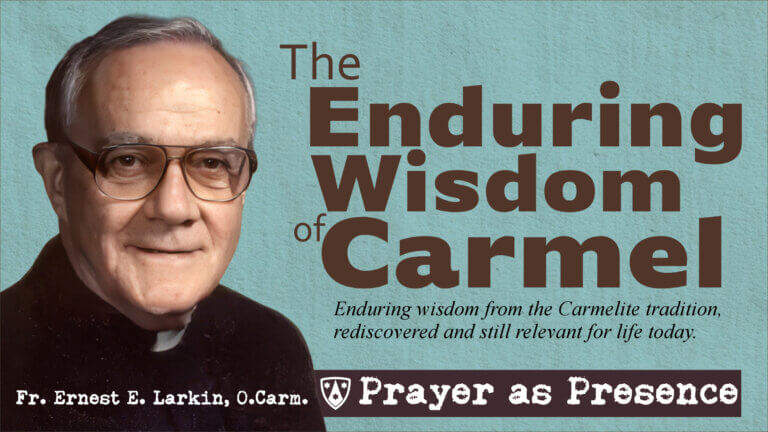
Padre Ernest Larkin è un teologo e docente carmelitano statunitense.
Il termine “presenza” può significare “presenza in” o “presenza a”. Nel primo caso si tratta di presenza spaziale, ovvero di un luogo. Io sono in questa stanza; Dio è nella chiesa. Ma cosa significa questo nel caso di Dio? Dio non è un corpo, quindi non può trovarsi in un luogo in senso spaziale. Salomone rifletté su questo problema in occasione della dedicazione del tempio. Se l’universo non può contenerti, Yahweh, pregò, come puoi «dimorare» in questo tempio? La risposta di Yahweh fu che Egli avrebbe abitato nel tempio, nella misura in cui sarebbe stato lì ad ascoltare le preghiere del Suo popolo e, in una certa reciprocità, essi avrebbero tenuto conto della Sua volontà (1 Re 8,27; 9,3-9).
Offrire a Dio
La presenza di Dio, in altre parole, è presenza a. È personale e dinamico. Dinamico, perché Dio è presente là dove agisce; personale, perché è un agente intelligente, una persona che ama, ed è presente là dove agisce in modo consapevole e amorevole.
Lo scolaretto che guarda l’orologio in classe è presente nell’aula, ma non agli occhi dell’insegnante. La giovane suora Teresa di Gesù, che osservava la clessidra durante il momento di preghiera mentale, era in in cappella, ma non del tutto presente al Signore. D’altra parte, un ragazzo e una ragazza possono crescere porta a porta senza quasi accorgersi l’uno dell’altra; un giorno si innamorano e da quel momento in poi sono intensamente presenti l’uno all’altra, anche se il giovane parte per il servizio militare o la ragazza si trasferisce in un’altra città. La presenza personale, sia con l’uomo che con Dio, è più un’esperienza che un fatto fisico. L’anima, dice san Tommaso, è più presente dove ama che dove anima.
Dio è sempre e ovunque presente nel mondo. Egli non è solo il fondamento dell’essere e il principio della vita; è padre, signore, sposo, amico. È il Padre che chiama a sé tutti gli uomini (ognuno per nome) nel Figlio, per opera dello Spirito Santo. È il Deus operarius di Sant’Ignazio, Dio che opera nell’universo, portando tutte le cose a compimento in Cristo.
Quando ricambiamo quella presenza, nasce la preghiera. Dio diventa una presenza per noi proprio come noi siamo una presenza per Lui. La preghiera, in altre parole, è presenza personale reciproca, presenza reciproca a, quindi presenza con Qualcuno. È incontro, incontro, contatto. È presenza offerta e ricevuta, chiamata e risposta, invito e accoglienza, dono e accettazione. La preghiera è presenza nell’amore: il mio amato verso di me e io verso il mio amato (Cant. 7, 16).
Dio è presenza
Questo concetto di preghiera ci libera dall’immenso fardello di oggettivare e definire Dio — un compito comunque impossibile — e colloca Dio sul piano molto reale, sebbene non concettuale, del “Tu”. Il Padre, Cristo o lo Spirito Santo sono una presenza amorevole, che pervade ogni cosa come l’atmosfera, come una musica di sottofondo o un ambiente divino in cui viviamo, ci muoviamo ed esistiamo (Atti 17,28). Ma Dio rimane una persona. Egli non è ridotto a una dimensione dell’universo; è una Presenza evocata dall’esperienza ma al di là di ogni segno o simbolo, parte della vita ma al di là di ogni vita, l’inizio e la fine e tuttavia totalmente trascendente rispetto alle più alte possibilità dell’uomo. In una parola, Egli è reale non perché sia comprensibile attraverso le categorie della mente, ma perché “c’è”. Non è un oggetto misurabile e definibile; nella migliore delle ipotesi, le immagini e i concetti che usiamo per identificarlo sono solo una misera traduzione di un amore che sfida ogni linguaggio adeguato.
Attraverso la preghiera nasce una nuova realtà, e quella realtà è la persona che prega. La persona che prega è una presenza religiosa; emana le “vibrazioni” di chi vive con Dio. L’Assoluto, il Trascendente, il Sacro, l’Aldilà nel cuore della vita: sono questi gli elementi che emergono come interesse, orientamento e preoccupazione dell’uomo religioso. Tali sono i contemplativi. Tali sono i mistici, tali sono tutte le persone veramente religiose che strutturano la loro intera vita attorno a questo valore di Dio nell’esistenza umana.
Sia la conoscenza che l’amore sono coinvolti nel processo di sviluppo della presenza religiosa. Ma l’amore è la chiave. Dio è una presenza per me quando Lo conosco attraverso l’amore. È un luogo comune in teologia affermare che la grazia dona una conoscenza “quasi-esperienziale” di Dio e che la contemplazione è un“”esperienza di Dio”. La ricerca storica ha dimostrato che, per i teologi medievali, la qualità esperienziale della conoscenza cristiana di Dio derivava dagli affetti. L’esperienza mistica è un’esperienza d’amore. La presenza si rivela non attraverso una conoscenza approfondita dell’altra persona, ma in un incontro amorevole da persona a persona.
Il problema di parlare di Dio
Concepire la preghiera come presenza significa riformulare vecchie verità, forse in termini in qualche modo nuovi. Qual è il valore di questa formulazione della preghiera? A mio avviso, la preghiera come presenza è una formulazione particolarmente azzeccata per due ragioni: (1) fornisce un linguaggio; (2) suggerisce un programma per coltivare una vita di preghiera in un contesto contemporaneo.
In primo luogo, risolve il problema del linguaggio. Parlare di Dio in modo significativo è sempre stato un problema, perché Dio vive in una sfera diversa da quella dell’uomo; Egli dimora nella luce inaccessibile (1 Tim. 6, 16). Per noi, parlare di Lui richiede un costante adeguamento, poiché Egli è più diverso da noi che simile a noi. Ma oggi il problema è aggravato dal cambiamento culturale, dai mutamenti nei modelli di pensiero e di vita che ci hanno reso a disagio rispetto alle vecchie formulazioni su Dio e sulla religione. Dobbiamo ancora sviluppare nuove forme accettabili. Segni di questa transizione culturale nella religione sono il senso dell’assenza di Dio anziché della Sua presenza nel nostro mondo, le teologie della “morte di Dio”, la notte oscura cosmica che sembra influenzare tutti i livelli dell’esperienza religiosa, anche mentre l’uomo continua a conquistare aspetti tecnici dell’universo con i voli sulla Luna. Viviamo in un’epoca abbandonata da Dio perché le forme e le strutture che abbiamo ereditato non corrispondono al modo in cui pensiamo e sentiamo Dio e il mondo della fede. La spinta e il dinamismo della nostra fede e della nostra carità sono su lunghezze d’onda diverse rispetto alle immagini e ai concetti del passato.
Dio è nel nostro mondo, senza dubbio; è immanente. Ma non è il nostro mondo né alcuna sua parte; è totalmente trascendente. Come possiamo esprimere questo Essere ineffabile? Egli è “là fuori” in un certo senso, ma non è semplicemente al fianco delle altre cause e della realtà creata; Egli è l’intimo di tutte le cose, il centro dinamico della vita, che si manifesta nelle persone, negli eventi, nella storia.
La doppia realtà di Dio
Il concetto di presenza sembra cogliere questa duplice realtà di Dio. Esso salvaguarda la realtà divina, pur collocando Dio nella condizione umana. I segni e i simboli si fondono con la Sua Presenza. Dio rimane Dio, ma viene riconosciuto nell’uomo — in se stessi, nel prossimo, nel proprio mondo. Le nette distinzioni delle categorie più intellettualistiche e statiche lasciano il posto alla comprensione interpersonale e ai temi personalisti.
Abraham Maslow collega la capacità di unire gli opposti e di tenere insieme i due estremi dello spettro al raggiungimento di una personalità matura. Egli scrive:
È come se le persone meno evolute vivessero in un mondo aristotelico in cui le categorie e i contrasti hanno confini netti e sono reciprocamente esclusivi e incompatibili. Ad esempio: maschio-femmina, egoista-altruista, adulto-bambino, gentile-crudele, buono-cattivo. Ma ciò che le persone che realizzano se stesse vedono come un dato di fatto è che ‘A’ e ‘non A’ si compenetrano e sono una cosa sola, che ogni persona è contemporaneamente buona e cattiva, uomo e donna, adulto e bambino. Non si può collocare la persona nella sua interezza su un continuum solo come aspetto astratto di una persona.
I mistici hanno vissuto il coincidentia oppositorum. Il fatto è che Dio e l’uomo si “interpenetrano”. Il discorso su Dio e quello sull’uomo si includono a vicenda e l’uno è impossibile senza l’altro. Dio è incommensurabilmente al di sopra e al di là di noi, ma a un certo punto siamo più Dio di quanto siamo noi stessi. Il concetto di presenza ci permette di convivere con questo mistero. La presenza sposta il discorso sul piano della persona e sulla spinta congiunta dell’amore e della conoscenza, mentre altre definizioni di preghiera tendono a un’eccessiva oggettivazione in chiave razionalistica. La presenza, in altre parole, è meno cerebrale e più totale, più personale, più affettiva. Non è necessario avere idee chiare su Dio per conoscerLo profondamente. L’amore è una via d’accesso alla vita intima di Dio di gran lunga migliore di una conoscenza approfondita, come hanno sottolineato i santi e i mistici nel corso dei secoli.
Un programma di preghiera per i nostri tempi
Ma il contributo più importante del concetto di preghiera intesa come presenza è che esso suggerisce un percorso di preghiera per il nostro tempo. Nello specifico, indica come ha inizio una vita di preghiera, come si sviluppa e verso dove tende.
Innanzitutto, questo concetto ci ricorda che la preghiera autentica ha origine nel mondo reale, nel nostro io autentico, in tutte le relazioni con gli altri e nei nostri compiti nella vita. La preghiera non è una via di fuga. È un contatto con Dio dove Viene da noi. Ciò significa la vita reale, nel profondo della nostra identità, nei nostri rapporti umani con il prossimo. Dio non è un’astrazione che evochiamo con acrobazie mentali. Né appare tra noi in teofania, come avveniva nell’Antico Testamento. È venuto in Cristo l’Uomo e, come diceva san Giovanni della Croce, ha detto tutto ciò che aveva da dirci in Cristo. Ma Cristo non è distaccato dai Suoi membri; Egli continua a vivere nel mondo umano, nei Suoi membri. Ciò significa che la presenza di Dio è oggi diafana, risplende nel volto di Gesù così come Gesù si rifrange nei volti dei Suoi membri, specialmente nel anawim del nostro tempo. Quanto sono cristiane le parole di Dostoevskij: «Chi vuole trovare il volto del Dio vivente non deve cercarlo nel firmamento vuoto della propria mente, ma nell’amore umano».
Potremmo infatti avanzare una solida argomentazione biblica e teologica a sostegno dell’auto-rivelazione di Dio come presenza. Quando Mosè chiese il nome di Yahweh, ricevette questa risposta: “Io sarò lì”. Questo è il nome di Dio. Egli è una Presenza. È una Presenza nel Tempio e, in seguito, nella sinagoga, perché lì si offre e lì viene accolto: Egli possiede quel luogo. Nel Nuovo Testamento, quando Dio viene adorato in spirito e verità, le persone e le comunità diventano il Suo tempio. Egli le possiede come la Presenza che dona luce e vita alle loro esistenze. La Dimora interiore è l’aspetto personale della grazia: avere la grazia (avere il favore), diceva san Bonaventura, si ottiene da Dio (notizie su Deo).
Come si sviluppa la preghiera
In che modo la presenza indica le linee guida per sviluppare la preghiera nella propria vita? La risposta sta nella natura stessa della presenza personale. La presenza è una realtà in continua evoluzione, non un risultato raggiunto una volta per tutte. Come l’amicizia, come l’amore, cresce — o si affievolisce — con l’aumentare dell’apertura e dell’amore. Ciò significa, in modo semplice e categorico, che la presenza cresce con la maturità.
Che cos’è la maturità se non la sana capacità di trascendere se stessi nella conoscenza e nell’amore, di uscire dal proprio meschino isolamento e di incontrare la realtà oggettiva, in particolare le persone e, in ultima analisi, Dio? È proprio questo il significato dell’autorealizzazione, della maturità. Questa è la vera “realizzazione di sé”, quella di cui parlava Paolo VI in Lo sviluppo dei popoli. In quell’occasione il Papa ha affermato che abbiamo lo stesso dovere di realizzarci spiritualmente quanto quello di salvare le nostre anime. Ha parlato della realizzazione personale secondo il Vangelo, che paradossalmente raggiunge il proprio pieno sviluppo attraverso il dono e la rinuncia.
Con questa riflessione ci troviamo al cuore della vocazione contemplativa. I contemplativi esistono per pregare, per diventare Cristo in preghiera. Ma, paradossalmente, ciò equivale a dire che esistono per diventare se stessi. Thomas Merton lo ha espresso magnificamente in una delle sue ultime interviste. Ha identificato la crescita nella preghiera con la crescita personale. “Tutto ciò che possiamo fare”, disse, “è cercare di essere onestamente noi stessi”. Il sé in questione, ovviamente, non è il nostro sé illusorio, ma il nostro sé reale, che possiede se stesso donandosi. “Ciò che conta davvero non è come ottenere il massimo dalla vita, ma come ritrovare se stessi in modo da potersi donare pienamente”.”
Il ricordo è presenza totale
Questo consiglio è caratterizzato da una nota di realismo. La preghiera richiede rinuncia, ma anche coinvolgimento e impegno verso gli altri. Il contemplativo si rivolge agli altri in profondità piuttosto che in numero, cercando la presenza cristica nel mondo alla sua fonte, Cristo stesso come persona, piuttosto che nelle Sue molteplici manifestazioni come persona, piuttosto che nelle Sue molteplici manifestazioni nei figli degli uomini. Ma questa inclinazione o enfasi non può mai diventare un impegno esclusivo, al punto da escludere gli altri esseri umani dal proprio amore e dalla propria attenzione. Il tempo trascorso con gli altri al di fuori della comunità contemplativa sarà minimo, ma il cuore del contemplativo è vasto quanto il mondo.
Il consiglio di Merton è quanto mai opportuno. “Ritrova te stesso per poterti donare pienamente”. Ritrovare se stessi non significa allontanarsi dalla realtà. Significa essere c'è tutto, essere totalmente presenti nel luogo in cui ci si trova e in ciò che si sta facendo, essere presenti in profondità, cioè in tutti i significati della situazione. Così la persona sensibile, vigile e comprensiva nei confronti dei timidi sforzi di una persona schiva che cerca di avvicinarsi agli altri, è “raccolta in sé”. Lo stesso vale per l’ascoltatore che si impegna con ogni sforzo per prestare attenzione e ascoltare, per sintonizzarsi con la verità e la realtà ed escludere la distorsione e l’illusione. Il raccoglimento significa uscire dal mondo chiuso del sé isolato, dichiarare la propria indipendenza dall’orgoglio ferito e dalla meschina autoindulgenza a favore di una vita dedicata a qualcosa di più grande e migliore di sé stessi. Il silenzio e la solitudine, in altre parole, non sono rifugi dalla vita. Sono una forma superiore di comunicazione con Dio e con il prossimo; altrimenti sarebbero pratiche prive di valore per il contemplativo.
Lo scopo della preghiera
Il contributo fondamentale del concetto di presenza sta proprio in questo richiamo all’obiettivo globale di una vita di preghiera; forse in passato si è fatto troppo spesso ricorso a distinzioni nette. Considerare la vita di preghiera come un’unione con Dio in senso individualistico, come una devozione incentrata sul rapporto «Gesù e io», può derivare solo dalla dicotomizzazione della vita e dal ridurre un suo aspetto alla totalità. In ogni caso, i cristiani di oggi, sia all’interno che all’esterno dei conventi, vedono la vita di preghiera come l’integrazione dell’amore per Dio, dell’amore per gli uomini e dell’autentico amore per sé stessi. Qualcuno ha scoperto un segreto profondo della risposta cristiana identificando la parola J.O.Y. come un acrostico di Jesus-others-you, i tre elementi presenti in ogni vita cristiana. Anche la famosa massima di Gabriel Marcel calza a pennello in questo contesto: egli ci racconta di aver cercato Dio in Se stesso senza riuscire a trovarLo; poi di aver cercato Dio nella propria anima senza riuscire ancora una volta a trovarLo; infine di aver cercato Dio negli altri e di aver trovato sia Dio, sia gli altri, sia se stesso.
“Il concetto di ”Presenza“ chiarisce questi fattori. Dio diventa il mondo intero di ciascuno man mano che la propria santità cresce, senza però annullare gli altri né se stessi. Esistono due aspetti fondamentali di questo amore, illustrati dal ”Io-Tu“ e dal ”Noi“ di Platone. Nella relazione ”Io-Tu“ due persone si guardano l’una l’altra con amore; nella relazione ”Noi“ le stesse due persone affrontano un compito comune. Ogni relazione esprime un diverso tipo di presenza, un diverso aspetto dell’amore. Il primo modo è la forma forte di presenza. È l’unione sponsale, contemplativa e mistica con Dio. L’altra forma è quella ”debole“ di presenza, intesa come consapevolezza esplicita di Dio come persona. Ma ciò che conta è l’amore vero, e l’amore vero è idealmente lo stesso in entrambi i casi. La collaborazione con Dio in un progetto comune, l’operare con Dio per costruire una comunità, può sembrare meno ”religiosa», ma fa parte di ogni vita cristiana, anche di quella contemplativa, ed è una forma di presenza che apporta il proprio contributo alla vita di preghiera. Le forme forte e debole di presenza sono complementari e si includono a vicenda. Sono entrambe forme di preghiera: una è preghiera esplicita, l’altra è preghiera implicita.
Questo approccio sottolinea la continuità tra vita e preghiera e abbatte le false dicotomie tra l’amore per Dio e l’amore per il prossimo. La preghiera non può essere limitata ai momenti vuoti della vita; è intrecciata con tutto ciò che facciamo. Tutta la vita è una ricerca di Dio. Questa ricerca si manifesta nelle gioie e nei sacrifici umani, nel perseguimento dei valori umani così come nel confronto diretto. Alcuni valori umani sono più fondamentali di altri, ma tutti tendono a Dio, che è l’Ultimo, davanti al quale ogni altra cosa svanisce nel nulla. Il vincolo della carità tiene insieme le nostre aspirazioni umane – lo sforzo di crescere, di essere persone amorevoli – e l’unione con Dio. La vera crescita e il vero sviluppo si misureranno sempre in base al senso della presenza di Dio nella propria vita, non come un particolare tipo di esperienza — dolce o arida che sia —, ma come una forza efficace, che ci rende persone fedeli, piene di speranza e amorevoli, per le quali Dio è sopra ogni cosa e in tutti noi.
Per saperne di più sulla storia, la teologia e la spiritualità dei Carmelitani, visita la Collezione Carmelitana all'indirizzo carmelitanacollection.org
Informazioni su padre Larkin:
Padre Larkin Ernest E. Larkin nacque a Chicago il 19 agosto 1922. Entrò al Mount Carmel College di Niagara Falls, nell’Ontario, come seminarista delle scuole superiori, e si diplomò nel giugno del 1939. Ha emesso i voti nel 1940 e nel 1943 ha conseguito la laurea in filosofia presso il Mount Carmel College. È stato ordinato sacerdote l“8 giugno 1946. Padre Larkin completò i suoi studi teologici a Whitefriars nel giugno del 1947 e durante le estati svolse studi post-laurea in letteratura inglese presso la Catholic University. Completò i suoi studi di specializzazione in teologia all”“Angelicum” (Università di San Tommaso) a Roma, conseguendo il dottorato in teologia (STD) nel 1954. Larkin fu assegnato a Whitefriars, il seminario maggiore dell’Ordine, dove prestò servizio come docente, direttore spirituale e, infine, maestro degli studenti dal 1951 al 1959. Nel 1959, Larkin fu nominato docente di teologia ascetica e mistica presso l’Università Cattolica d’America, dove continuò a ricoprire il ruolo di assistente e poi di professore associato fino alle sue dimissioni nel 1971. Durante questo periodo insegnò anche nel programma di master per maestre delle novizie presso il St. Mary’s College di Notre Dame e presentò la sua prima relazione alla Catholic Theological Society of America. “Il ruolo delle creature nella vita spirituale” (1962). Fu inoltre redattore consulente nell’ambito ascetico-mistico per la «New Catholic Encyclopedia», sulla quale furono pubblicati diversi suoi articoli. Durante il suo mandato alla Catholic University, Larkin tenne discorsi alla Conferenza dei Superiori Maggiori maschili a Mundelein, Illinois, e intervenne in diverse riunioni della Canon Law Society of America nonché alla Sister Formation Conference. Fu attivo all’interno della propria comunità carmelitana, facendo parte del consiglio provinciale dal 1966 al 1972, con responsabilità specifiche nell’ambito della vita spirituale. Fu eletto delegato al Capitolo Generale a Roma nel 1965, 1968, 1971 e 1983. Problemi di salute lo costrinsero a un congedo per motivi medici dall’Università nel febbraio 1970. Larkin fu invitato a ricoprire il ruolo di teologo residente nella diocesi di Phoenix, in Arizona, appena istituita, e dopo il congedo per l’anno accademico 1970-1971, Larkin rassegnò le dimissioni dalla Catholic University. Nel 1972, padre Larkin fu cofondatore del Kino Institute, istituito come Scuola Diocesana di Phoenix per l’Educazione Religiosa degli Adulti destinata a clero, religiosi e laici. Ne fu il primo presidente e contribuì a definire gli obiettivi e le finalità dell’Istituto. Il numero degli iscritti crebbe fino a raggiungere i 1.780 studenti in due anni.
Negli anni ’70, Larkin tenne numerosi ritiri e seminari in tutto il Paese e all’estero, compreso l’Estremo Oriente. Ha tenuto corsi estivi presso la St. Louis University (1978) e la Creighton University di Omaha (1979), ed è stato il referente del vescovo presso il Movimento Carismatico Cattolico di Phoenix.
In questo periodo furono pubblicati diversi articoli di Larkin e, nel 1973, uscì il libro pionieristico “Spiritual Renewal of the American Priesthood” (Rinnovamento spirituale del sacerdozio americano), commissionato dalla Conferenza Episcopale. Larkin ne fu co-curatore e ne scrisse la bozza finale. Negli anni ’80, il ministero di Larkin comprendeva programmi di rinnovamento presso l’Università di Notre Dame per “Retreats International” e il “Programma di Formazione Continua per il Clero”, oltre a programmi di formazione permanente per i Carmelitani a Roma. È stato consulente per la sezione di spiritualità della rivista internazionale “Concilium” e per il “Center for Human Development” di Washington, DC. In quegli anni furono pubblicati anche due libri di padre Larkin: “Silent Presence” (1981, rivisto e ampliato nel 2001), una riflessione sul discernimento come processo e come problema, e “Christ Within Us” (1984), una raccolta di saggi che esplora l’esperienza contemporanea di Cristo, della Chiesa e di sé stessi.
Nel 1982, Larkin è stato membro fondatore del “Carmelite Forum”, un gruppo di studiosi di entrambe le osservanze impegnati nello studio e nella promozione della spiritualità carmelitana. I loro seminari annuali, tenuti presso il St. Mary’s College di Notre Dame, hanno attirato sacerdoti e laici da ogni parte del Paese. Le relazioni di Larkin sono state pubblicate su riviste e raccolte relative al seminario, oltre che su audiocassette. (Pubblicazioni ICS) “The Carmelite Forum” al St. Mary’s di Notre Dame, giugno 2000. È stato pubblicato dalla Paulist Press insieme ad altri saggi di quel seminario in “Carmelite Prayer”, un volume commemorativo in onore di padre Ernie, pioniere nello studio della spiritualità carmelitana.
Il suo saggio “Spiritualità giubilare” ha ricevuto il primo premio dall’Associazione della Stampa Cattolica nella categoria “Articoli sulla spiritualità dell’anno 2000”.”
Padre Larkin continuò a insegnare, a tenere ritiri spirituali, a partecipare a seminari e a scrivere fino alla sua morte, avvenuta nel 2006.
I Carmelitani della Provincia del Purissimo Cuore di Maria, in fedeltà a Gesù Cristo, vivono in una posizione profetica e contemplativa di preghiera, vita comune e servizio. Ispirati da Elia e Maria e informati dalla Regola carmelitana, diamo testimonianza di una tradizione di trasformazione spirituale lunga ottocento anni negli Stati Uniti, in Canada, Perù, Messico, El Salvador e Honduras.
Considerate la possibilità di sostenere la loro missione
https://carmelitemedia.tiny.us/supportpcm
per effettuare una donazione finanziaria.