
Lecciones de de'Pazzi para hoy
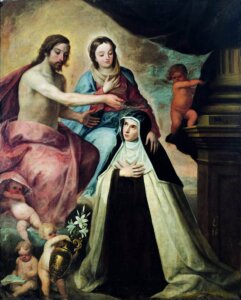
Visión de Santa María Magdalena de’ Pazzi de Pedro de Moya (hacia 1640)
Visité a la Hna. Verónica del Inmaculado Corazón de María, O.Carm., en el Carmelo de María en Wahpeton, ND, para hablar de María Magdalena de Pazzi en nuestra serie “¿Por qué no hay un Santo Carmelo? El siguiente es un extracto de audio (y transcripción) de esa discusión en la que la Hna. Verónica discute las lecciones que María Magdalena de Pazzi tiene que enseñarnos en el mundo de hoy y cómo podemos vivirlas.
TRANSCRIPCIÓN DE SR VERONICA SOBRE LAS LECCIONES DE MARÍA MAGDALENA DE'PAZZI PARA EL SIGLO XXI:
Me pediste también que hablara de las lecciones que ella [María Magdalena de'Pazzi] tiene que enseñarnos en el mundo de hoy y cómo podemos vivirlas. Hay muchas, pero he escogido tres, y las tres están tomadas de su experiencia el día en que fue liberada de sus cinco años de libertad condicional y juicio de la Guarida de los Leones.
La primera es la esperanza.
El segundo es lo que significa vivir en la Iglesia.
Y la tercera es la pureza.
Entonces, esperanza, porque es difícil definir cuál fue exactamente su prueba. Sabemos que fue tentada contra su vocación religiosa, pero creo que, en última instancia, fue una prueba de esperanza, porque los espíritus malignos intentaban hacerle creer que su alma estaba perdida. E incluso trataron de impedir que comulgara. Le decían que si comulgaba, ofendería aún más a Dios.
Cuando fue liberada de estas tentaciones, vio a sus santos patronos, y describiré más en un momento, pero también vio a los demonios que a lo largo de los cinco años, aunque ella siempre había sido fiel y nunca había cedido a las tentaciones, en su debilidad había actuado imperfectamente en algunas situaciones o luchado, y los demonios habían estado allí con sus pequeños cuadernos anotando cada mínima imperfección. Y llegaron los santos, cogieron esos cuadernos y los rompieron.
Y cuando leo eso, se me llenan los ojos de lágrimas, porque no resuena con nuestra propia experiencia, que tan a menudo tenemos una larga lista de todas las razones por las que no somos dignos de ser hijos de Dios, y nos desanimamos por nuestras debilidades, nuestras imperfecciones, y estamos tentados a rendirnos y pensar que no vamos a llegar al final.
Pero Dios no lo ve así. A Él no le interesa llevar la cuenta de todas nuestras imperfecciones que surgen de nuestra debilidad. Lo que le importa es que perseveremos hasta el final en dejar que nos transforme en su amor, y que pongamos toda nuestra esperanza en él porque le importan los resultados finales. Y lo ve desde una perspectiva distinta a la nuestra.
Y la segunda lección es sobre la iglesia y la comunión de los santos, porque como dije, cuando ella salió de su prueba, vio a doce de sus santos patronos especiales que venían en parejas, y cada uno le regalaba una joya o, o ropa, algún adorno, que representaba una gracia espiritual que Dios le estaba dando.
Y entonces vio que estaban cantando y bailando y celebrando porque se regocijaban de que ella había superado esta prueba. Entonces hizo algo maravilloso. Quiso bailar con ellos, y literalmente comenzó a saltar y bailar por todo el monasterio con los santos.
Así que lo veo como una imagen de toda su espiritualidad.
En el mundo de hoy, hay tanto individualismo. Y podemos pensar en la oración como mi propia relación privada con Dios, pero su oración era siempre eclesial. Siempre era en la Iglesia. En primer lugar, porque solía estar relacionada con la liturgia y la fiesta del día, pero incluso en su oración más íntima era siempre consciente de los santos del cielo, pero también de los santos de la tierra. Ella veía a sus propias hermanas y rezaba por ellas, incluso cuando estaba unida a Nuestro Señor. Y ella, cada vez que Él quería concederle una gracia, decía: No estaré contenta si no concedes también una gracia a todas mis hermanas. Sabes, estamos todos juntos en esto.
Y la tercera lección es la pureza.
Al final de esta gozosa experiencia de celebración y baile con los santos, fue a rezar a la Santísima Virgen María, a la que tuvo una gran devoción toda su vida y la Virgen aparece con frecuencia en todas sus obras.
Y ofreció su pureza a María. Y ella dice, no es la pureza en un sentido que yo tenía al principio, pero te la ofrezco nueva habiendo sido re adornada y re purificada a través de todo esto que ha sucedido. Ella ofreció todo eso a María.
Para Santa María Magdalena de'Pazzi, la pureza es mucho más que estar limpios de nuestros pecados. En realidad, equivale a receptividad. En una de sus meditaciones sobre la fiesta de la Asunción ve que el cielo no estuvo completo hasta que María estuvo allí, hasta que fue elevada en la Asunción, porque Dios buscaba a alguien a quien pudiera comunicarse completamente. Y la única criatura que encontró que podía recibir plenamente ese don fue María, por la pureza de su corazón.
Y a eso estamos llamados también nosotros, como carmelitas, a ser capaces de recibir ese don de la presencia de Dios a través de nuestra pureza de corazón. Además, para ella la pureza no era algo frío, sino algo que da vida, algo que nos hace plenamente humanos.
Habló no sólo de nuestra búsqueda de la pureza de corazón, sino de la pureza como atributo de Dios mismo, y en particular de Dios Padre. Y habló de la leche como símbolo de la pureza del Padre, y la leche da la vida.
Así que creo que esta pureza es una lección que realmente se necesita en el mundo de hoy porque mucha gente está buscando su identidad, su integridad, y no la están encontrando porque la están buscando fuera de Dios. Pero si nosotros, como Carmelitas, podemos recibir esa pureza de Dios y llevarla a los demás, traerá una gran sanación. Y puedo atestiguar por experiencia propia que la oración contemplativa nos cura, nos transforma y nos purifica para que podamos ser como Dios.
Y por eso me gustaría terminar con una oración en palabras de la propia Santa María Magdalena de'Pazzi.
Por favor, Señor, te lo suplico. No me quites el poder de tu divinidad, sino mantenme, Señor, en la inocencia que me diste desde el principio. Mantén el pacto que hiciste contigo mismo por mí. Guárdame, te lo suplico, para que pueda derramarte en mi prójimo. Es decir, tu amor, tu luz, en las criaturas que amas. Guárdate en mí y guarda también a todos los que con fatiga y trabajo recorren tus caminos. Conserva en mí a tu Espíritu Santo y confirma a tu esposa en tu gracia para que pueda coronarla con la regeneración realizada en todas tus criaturas para conducirlas a ti.
Amén.
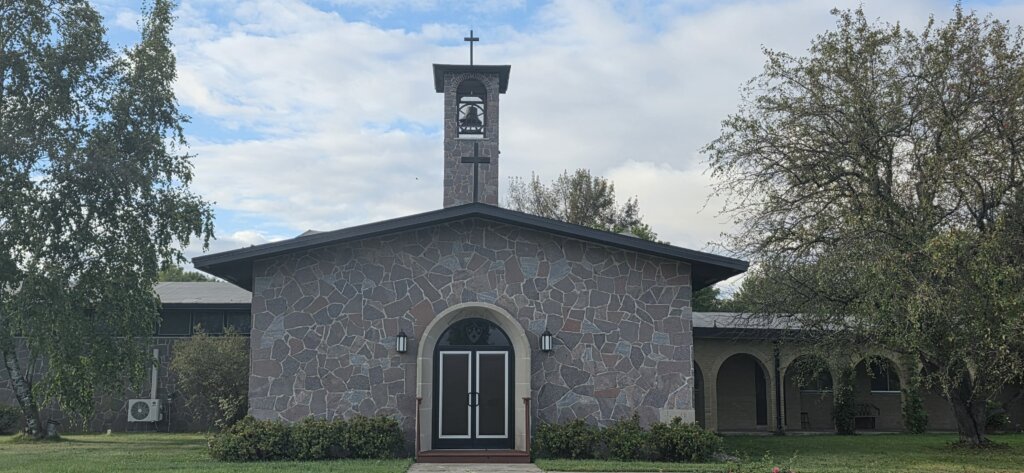
La Hna. Verónica también copresentará una charla sobre Mística trinitaria en el Carmelo en la próxima
Into the Land of Carmel evento en el Campus Carmelita en Darien, IL.
Más información e inscripción en https://tinyurl.com/landofcarmel

Para saber más sobre María Magdalena de'Pazzi, visite Publicaciones de Carmelite Media para adquirir el La llama sagrada: tras las huellas de Santa María Magdalena de'Pazzi.
Los Carmelitas de la Provincia del Purísimo Corazón de María, en fidelidad a Jesucristo, viven en una postura profética y contemplativa de oración, vida común y servicio. Inspirados por Elías y María e informados por la Regla Carmelita, damos testimonio de una tradición de ocho siglos de transformación espiritual en los Estados Unidos, Canadá, Perú, México, El Salvador y Honduras.
Considere la posibilidad de apoyar su misión
https://carmelitemedia.tiny.us/supportpcm
para hacer una donación económica.