
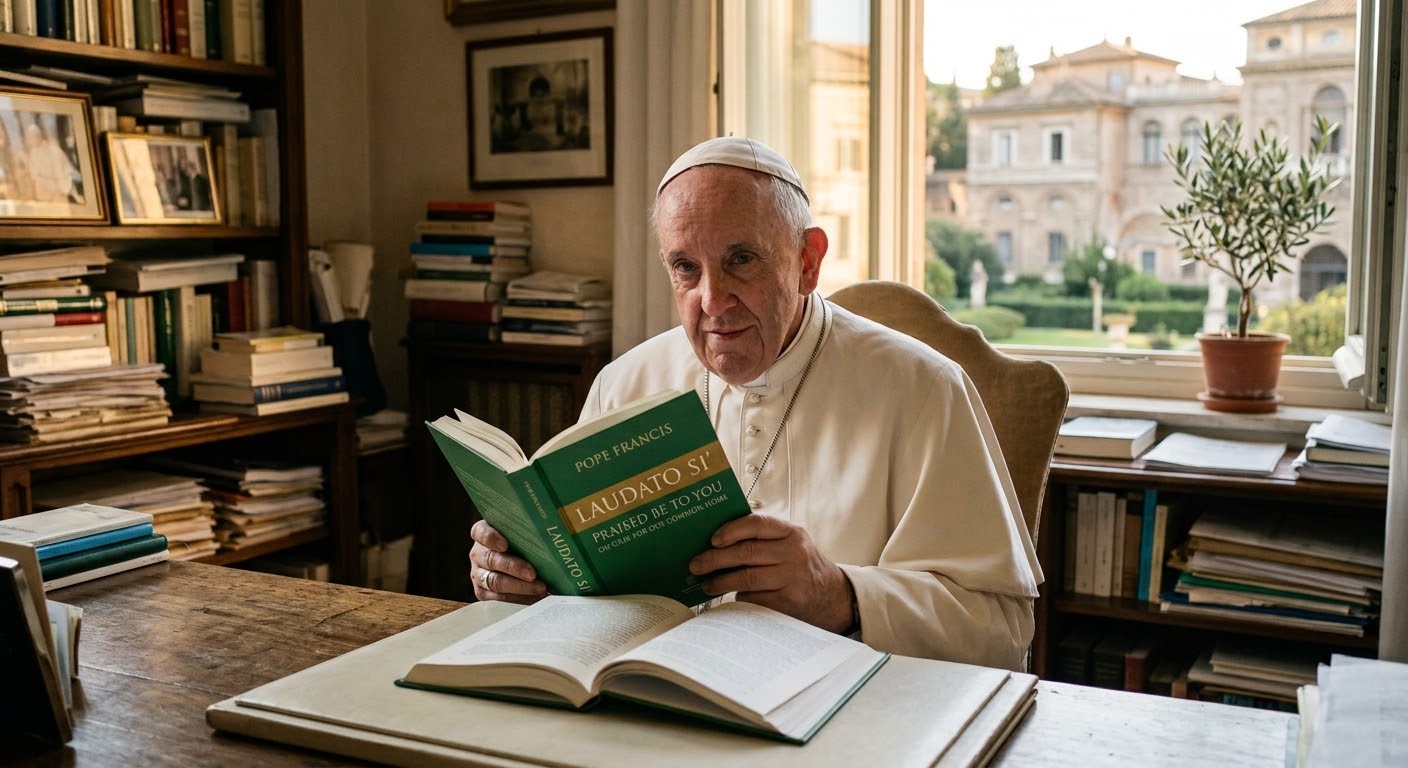
Living Our Way Out of The Crisis
If the present pattern continues, the consequences of the inevitable doomsday conclusions of the crisis will be at our doorstep, if not inside front door, before we face the reality that we must change. Our lifestyle of excessive consumption and its consequent waste is a dominant driving force of the environmental crisis. Pope Francis in his encyclical has joined his voice to a chorus of wise spokespersons around the world. The message is clear. The gamechanger is to modify our lifestyle to become more responsible to and respectful of the gift of God’s creation.
Right now, comfort and convenience are the coin of the realm. It seems likely the destructive consequences of the crisis will prevail until personal sacrifice becomes the norm. We are not going to legislate our way out of the crisis. Nor does technology have a magical exit for us. We will have to live our way into a compatible union with God’s plan for God’s creation.
Francis offers this practical advice: “Christian spirituality proposes an alternative understanding of the quality of life, and encourages a prophetic and contemplative lifestyle, one capable of deep enjoyment free of the obsession with consumption. We need to take up an ancient lesson, found in different religious traditions and also in the Bible. It is the conviction that ‘less is more.’ A constant flood of new consumer goods can baffle the heart and prevent us from cherishing each name and each moment…
Christian spirituality proposes a growth marked by moderation and the capacity to be happy with little. It is a return to that simplicity which allows us to stop and appreciate the small things, to be grateful for the opportunities which life affords us, to be spiritually detached from what we possess, and not to succumb to sadness for what we lack.” (Laudato Si´ #222)
Francis offers some simple but meaningful steps to begin our response to the crisis:
“Education in environmental responsibility can encourage ways of acting which directly and significantly affect the world around us, such as avoiding the use of plastic and paper, reducing water consumption, separating refuse, cooking only what can reasonably be consumed, showing care for other living beings, using public transport or carpooling, planting trees, turning off unnecessary lights, or any number of other practices. All of these reflect a generous and worthy creativity which brings up the best in human beings. Reusing something instead of immediately discarding it, when done for the right reasons, can be an act of love which expresses our own dignity.” (Laudato Si´ #211)
Today, it is political suicide to suggest any personal sacrifice. We are in a situation that threatens the very existence of human life on our planet. Yet, the majority stand rigid in opposition to personal sacrifice and change.
The summer of 2026 has seen nightly news lead with daily horror stories of destructive floods, storms, tornados and record-breaking rainfall. They have left millions with deep personal loss and chaos. On the other hand, there has been hardly a whisper on climate change on either side of the political aisle.
This is why Laudato Si´ is so persistent in asking us to recognize that at its root, the crisis is a spiritual problem. We need a spirituality that will help free us from enslavement to a devastating consumer lifestyle. This will lead to a more intelligent and committed openness to face the threatening reality in front of us.
The issue is sin:
- It is sin to fail to recognize God’s dominion.
- It is the sin of blasphemy that treats God’s creation as if it were only a tool to satisfy human greed.
- It is sin that generates the most fundamental disrespect and neglect of human life.
All of these blatantly deny God’s plan for all humankind and God’s creation. Nature is there for the glory of God not for our convenience. The fundamental sin is placing ourselves at the center with God as our servant.
We need a spirituality that frees us to see with both the eyes of the heart and the eyes of the mind. We need a spiritualty that encourages us to embrace virtues that allow us to live responsibly with what we need, and to reject the desires coming from a multibillion-dollar advertising industry that swamps our daily life with falsehoods. We seldom have been challenged to understand that buying stuff is a moral act as well as an economic choice. Recognition of these realities is the first step in a journey to help all of humankind live a productive, healthy and responsible life that respects and nourishes God’s gift of creation. We need a radically new lifestyle. Laudato Si´ has this to say: “Since the market tends to promote extreme consumerism in an effort to sell its products, people can easily get caught up in a whirlwind of needless buying and spending. Compulsive consumerism is one example of how the techno-economic paradigm affects individuals… This paradigm leads people to believe that they are free as long as they have the supposed freedom to consume. But those really free are the minority who wield economic and financial power.” (Laudato Si´ #203)
The Papal letter continues, “When people become self-centered and self-enclosed, the greed increases. The emptier a person’s heart is, the more he or she needs things to buy, own, and consume.” (Laudato Si´ #204)
The following blogs in this series will offer a more concrete invitation into an ecological spirituality, and these next quotes from Laudato Si´ invite us into deeper reflection and action.
- “The rich heritage of Christian spirituality, the truth of 20 centuries of personal and communal experience, has a precious contribution to make to the renewal of humanity. Here, I would like to offer Christians a few suggestions for an ecological spirituality grounded in the convictions of our faith, since the teachings of the gospel have direct consequences for our way of thinking, feeling, and living. More than in ideas or concepts as such, I am interested in how such spirituality can motivate us to a more passionate concern for the protection of our world.” (Laudato Si´ #216)
- “Nature is filled with words of love, but how can we listen to them amid constant noise, interminable and nerve-wracking distractions, or the cult of appearances? Many people today sense a profound imbalance which drives them to frenetic activity and makes them feel busy, in a constant hurry, which in turn leads them to ride roughshod over everything around them. This too affects how they treat the environment.” (Laudato Si´ #225)
附录
在这几篇关于《愿祢受赞颂》中’生态皈依”的博客中,我将补充一些有用的信息,这些内容主要摘自“至圣玛利亚圣心省”的加尔默罗会通讯,在此特别感谢编辑丹尼斯·卡洛布。 此外,我将在博文正文中以及每篇博文结尾的反思引文部分,大量引用该通谕中的内容。 希望借此让读者深入了解教宗方济各这一激进愿景对当今时代的重大意义。虽然从这封教宗通谕中大量引用内容无疑会增加阅读难度,但我相信这绝对值得付出这份努力。.
圣方济各瞻礼暨“受造界年”的最后一天:10月4日
以下内容摘自“方济各精神”网站,, https://www.spiritoffrancis.com/feast-of-francis/
Each year on 4 October, Christians and many others around the world celebrate the Feast of St Francis of Assisi- the joyful friar whose life of simplicity, compassion, and kinship with all creation continues to inspire, eight centuries on.
Born in Assisi in the late 1100s, Francis turned from wealth and ambition to follow Christ in poverty and joy. He lived among the poor, cared for the sick, sought peace in times of conflict, and taught that every creature is a brother or sister. His friendship with Clare of Assisi and his tender love for the natural world still speaks powerfully today.
The Feast is a day to say thank you for this vision of hope – to remember that faith is about relationship: with God, with one another, and with the Earth itself. In October 2026 we will mark 800 years since St Francis’s death – not as a moment of mourning, but of renewal. The anniversary invites us to walk again in his footsteps: to live simply, act justly, rebuild what is broken, and recognize Christ’s presence in every person and every part of creation.
随着这一里程碑的临近,我们不仅在纪念一位圣人,更在庆祝一个充满和平、和解与喜乐之爱的鲜活运动——这正是当今世界依然需要的。.

